3. What is a Call Option?
A Call Option is a type of derivative contract that gives the buyer the right (but not the obligation) to buy a specific asset (like a stock, index, or commodity) at a fixed price called the strike price, on or before a specific date known as the expiry date.
This contract is created between:
- Buyer – pays a premium and holds the right to buy.
- Seller/Writer – receives the premium and is obligated to sell if exercised.
Why Use a Call Option?
Call options are used when a trader expects the price of the underlying asset to increase in the near future. It allows them to lock in a buying price and profit from appreciation, while limiting downside to just the premium paid.
They are also used by investors to:
- Gain leverage (control large positions with small capital)
- Execute bullish strategies
- Participate in upside without owning the asset
Real-Life Analogy
Imagine you want to buy a property priced at ₹50 lakh but need time to arrange funds. You pay ₹1 lakh as a token to reserve it for 2 months.
- If the property rises to ₹60 lakh, you still get to buy it at ₹50 lakh.
- If prices fall or you change your mind, you lose only ₹1 lakh.
That’s how a call option works — you reserve the right to buy at a fixed price by paying a small amount.
Call Option Contract – Breakdown
| Term | Meaning |
|---|---|
Detailed Example
- Expectation: Reliance Industries will rise
- CMP: ₹2,500
- Call Option:
- Strike Price: ₹2,550
- Premium: ₹30
- Lot Size: 250 shares
- Expiry: 1 month
Scenario A: Stock rises to ₹2,620
- Buy at ₹2,550, Sell at ₹2,620
- Profit per share = ₹70
- Gross Profit = ₹70 × 250 = ₹17,500
- Premium Paid = ₹7,500
- Net Profit = ₹10,000
Scenario B: Stock stays below ₹2,550 (e.g., ₹2,480)
- Do not exercise → expires worthless
- Loss = Premium Paid = ₹7,500
Payoff Analysis Table
| Market Price at Expiry | Exercise the Option? | Profit/Loss |
|---|---|---|
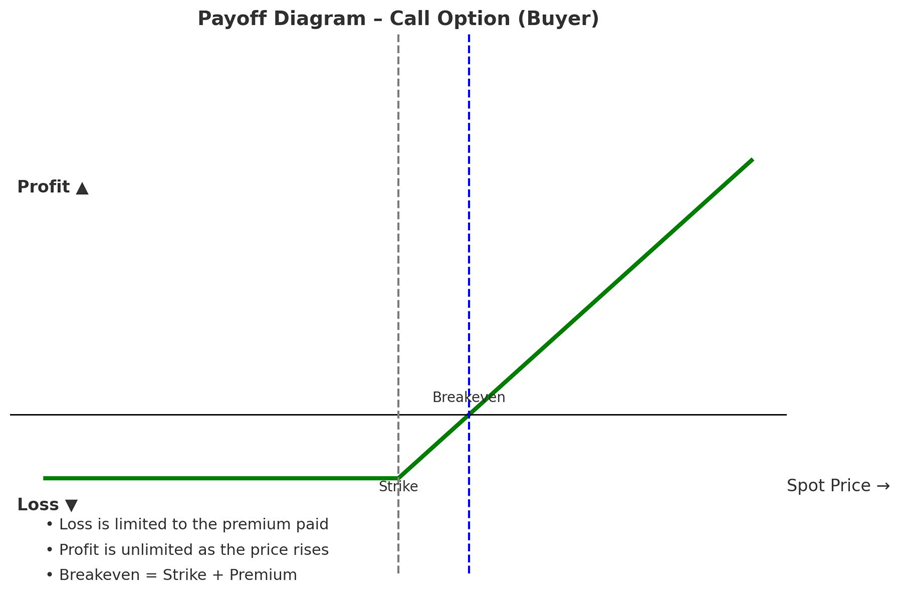
Payoff Diagram – Call Option (Buyer)
Advantages of Buying a Call Option
| Benefit | Explanation |
|---|---|
Key Takeaways
- A Call Option is a bullish tool. Buy when you believe the asset price will increase.
- The buyer pays a premium to gain the right to buy at a fixed price.
- If the price rises above the breakeven point (Strike + Premium), the buyer profits.
- If the price stays below the strike, the option expires worthless, and the maximum loss = premium paid.