The Stock Market Has Seasons Too! A Month-by-Month Guide to India's Best-Performing Sectors
Most investors know that summer boosts ice cream sales and Diwali boosts shopping. But did you know these seasonal changes also influence the stock market?
Every year, money rotates between sectors because consumer spending, weather, festivals, government budgets, agricultural cycles, and corporate earnings all follow predictable calendars. Experienced investors often monitor these trends to identify sectors that may receive stronger attention during certain periods. While no pattern is guaranteed, seasonal rotation has been observed across Indian markets over long periods.
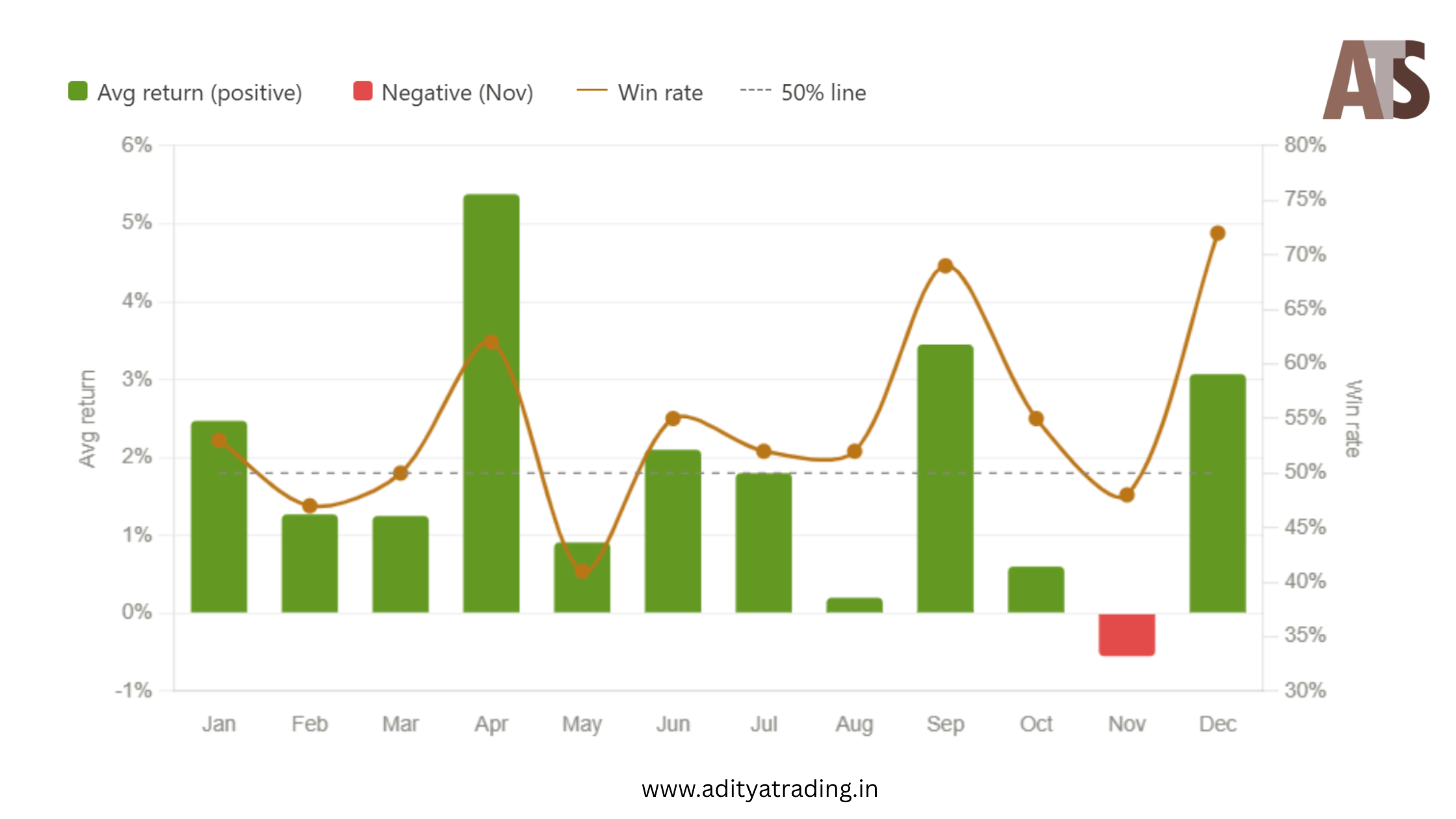
Here are some of the most interesting statistics.
| Month | Nifty Average Return | Positive Years | Historical Behaviour |
|---|---|---|---|
| January | +2.47% | 53% | New allocations, Q3 earnings optimism |
| February | +1.27% | 47% | Budget uncertainty makes it one of the weakest months |
| March | +1.25% | 50% | Financial year-end, portfolio rebalancing |
| April | +5.38% | 62% | Historically one of the strongest months |
| May | +0.91% | 41% | Mixed performance despite summer demand |
| June | +2.10% | 55% | Monsoon expectations drive agri stocks |
| July | +1.80% | 52% | Rural demand improves |
| August | +0.20% | 52% | Usually range-bound |
| September | +3.45% | 69% | Strong institutional buying historically |
| October | +0.60% | 55% | Festival season begins |
| November | −0.55% | 48% | Profit booking in some years offsets festive demand |
| December | +3.07% | 72% | Historically the highest win rate of the year |
Let's travel through the Indian financial calendar.
January – The New Beginning
Market Theme
-
New Year investments
-
Q3 earnings season
-
Budget expectations begin
Historically Active Sectors
-
Banking
-
Financial Services
-
IT
-
Capital Markets
Stocks to Watch
-
HDFC Bank
-
ICICI Bank
-
Kotak Mahindra Bank
-
BSE Ltd
-
CDSL
-
CAMS
Why?
Institutional investors rebalance portfolios at the start of the calendar year, while anticipation around the Union Budget often benefits financial stocks and capital-market businesses.
February – Budget Month
Market Theme
-
Union Budget
-
Tax changes
-
Infrastructure announcements
Beneficiary Sectors
-
Infrastructure
-
Railways
-
Defence
-
Capital Goods
-
PSU Companies
Stocks
-
Larsen & Toubro
-
BEML
-
BEL
-
HAL
-
IRCON
-
RVNL
-
NBCC
Why?
Government spending announcements can immediately influence companies linked to roads, railways, defence, and public infrastructure.
March – Financial Year-End
Market Theme
-
Companies close books
-
Mutual fund rebalancing
-
Tax-saving investments
Sectors
-
Banks
-
Insurance
-
Asset Management
-
Exchanges
Stocks
-
SBI Life
-
HDFC Life
-
Angel One
-
Motilal Oswal
-
BSE
-
CDSL
April – Summer Begins
This is where seasonality becomes very visible.
Strong Performers
✅ Beverages
✅ Ice Cream
✅ Air Conditioners
✅ Refrigerators
Stocks
-
Varun Beverages
-
Blue Star
-
Voltas
-
Havells India
-
Symphony
-
Whirlpool India
Why?
April marks the beginning of India's hottest months. Demand rises sharply for:
-
Soft drinks
-
Bottled water
-
Juices
-
Ice cream
-
Air conditioners
-
Air coolers
-
Fans
Many cooling-product companies generate a significant portion of annual sales during April–June.
May – Peak Summer
Usually the strongest month for:
-
Beverage companies
-
Cooling appliances
-
Quick commerce
-
Power demand
Stocks
-
Varun Beverages
-
Blue Star
-
Voltas
-
Havells
-
Symphony
-
Adani Power
-
NTPC
-
Tata Power
Why?
Heatwaves increase electricity consumption, boosting power demand. Consumers also buy more cold beverages, ice creams, ACs, coolers, and refrigeration products.
June – Monsoon Begins 🌧
Market Theme
Monsoon forecast
Beneficiary Sectors
-
Fertilizers
-
Agrochemicals
-
Seeds
-
Tractors
Stocks
-
Coromandel International
-
UPL
-
PI Industries
-
Rallis India
-
Mahindra & Mahindra
-
Escorts Kubota
Why?
A good monsoon improves crop production, lifts rural incomes, and supports demand for agricultural inputs and machinery. The India Meteorological Department's monsoon forecast is closely watched by investors.
July – Rural Economy Picks Up
Best Sectors
-
FMCG
-
Tractors
-
Two-wheelers
-
Agro Chemicals
Stocks
-
Hindustan Unilever
-
Dabur
-
Marico
-
Hero MotoCorp
-
TVS Motor
-
Mahindra & Mahindra
Why?
With better rainfall, rural purchasing power often improves, benefiting companies that rely heavily on village and semi-urban demand.
August – Infrastructure & Construction
Sectors
-
Cement
-
Steel
-
Engineering
-
Capital Goods
Stocks
-
UltraTech Cement
-
Shree Cement
-
JSW Steel
-
Tata Steel
-
Siemens India
-
ABB India
Construction activity and project execution often gain pace as the monsoon progresses and planning for the second half of the year accelerates.
September – Festive Inventory Build-Up
Winners
-
Consumer Durables
-
Jewellery
-
Retail
-
Auto
Stocks
-
Titan
-
Trent
-
Whirlpool India
-
Voltas
-
Dixon Technologies
Retailers and manufacturers begin stocking inventory ahead of India's biggest shopping season.
October – Festival Rally 🎆
India's biggest consumption month.
Strong Sectors
-
Automobiles
-
Jewellery
-
Consumer Electronics
-
Retail
-
FMCG
Stocks
-
Titan
-
Tata Motors
-
Mahindra & Mahindra
-
Maruti Suzuki
-
Trent
-
Avenue Supermarts (DMart)
Why?
Dussehra and Diwali are major purchase periods for cars, gold, electronics, appliances, and household goods. Historically, these sectors often see stronger sales during this period.
November – Wedding Season
Best Sectors
-
Gold
-
Hotels
-
Aviation
-
Restaurants
-
Apparel
Stocks
-
Titan
-
Indian Hotels
-
Lemon Tree Hotels
-
Jubilant FoodWorks
-
Sapphire Foods
-
InterGlobe Aviation
Indian weddings drive spending across jewellery, travel, hospitality, fashion, and food services.
December – Holiday & Travel Season
Winners
-
Hotels
-
Airlines
-
Tourism
-
Online Travel
-
Entertainment
Stocks
-
Indian Hotels
-
EIH
-
InterGlobe Aviation
-
IRCTC
-
PVR INOX
Year-end vacations, Christmas, and New Year celebrations often support travel and hospitality demand.
Month-by-Month Sector Rotation Calendar
| Month | Strong Themes | Example Stocks |
|---|---|---|
| January | Banks, Capital Markets | HDFC Bank, BSE, CDSL |
| February | Budget, Infrastructure | L&T, BEL, HAL |
| March | Financial Year-End | SBI Life, CAMS |
| April | Summer | Varun Beverages, Voltas, Blue Star |
| May | Cooling & Power | Symphony, NTPC, Tata Power |
| June | Monsoon | Coromandel, UPL, M&M |
| July | Rural Consumption | HUL, Dabur, Hero MotoCorp |
| August | Cement & Industrials | UltraTech, JSW Steel |
| September | Retail Build-Up | Titan, Trent |
| October | Festive Consumption | Maruti, Titan, DMart |
| November | Weddings & Travel | Indian Hotels, IndiGo |
| December | Tourism | IRCTC, EIH |
What Does History Say?
Research examining around a decade of Indian sectoral index data has found recurring seasonal strength in sectors such as FMCG, IT, Infrastructure, Pharma, and Metals during specific months. The study also observed that February has historically been relatively weak across many sectors, while April, September, and December have often shown stronger performance for the broader market. However, these are statistical tendencies—not fixed rules—and should be combined with valuation, earnings, and macroeconomic analysis.
The Bottom Line
Markets don't move solely because of charts—they move because businesses follow real-world demand cycles. Weather, festivals, agricultural seasons, government spending, tourism, school vacations, and consumer behavior all influence corporate earnings, and those earnings eventually influence stock prices.
For investors, understanding these seasonal themes can help build a watchlist ahead of time. But seasonality should be used as one input—not as a standalone investment strategy. Company fundamentals, valuations, earnings quality, and broader market conditions remain the most important drivers of long-term returns.
Disclaimer: This article is for educational purposes only and should not be considered investment advice. Historical seasonal patterns do not guarantee future performance.