How Leaders' Speeches Move the Stock Market: The Psychology Behind Every Market Rally and Crash
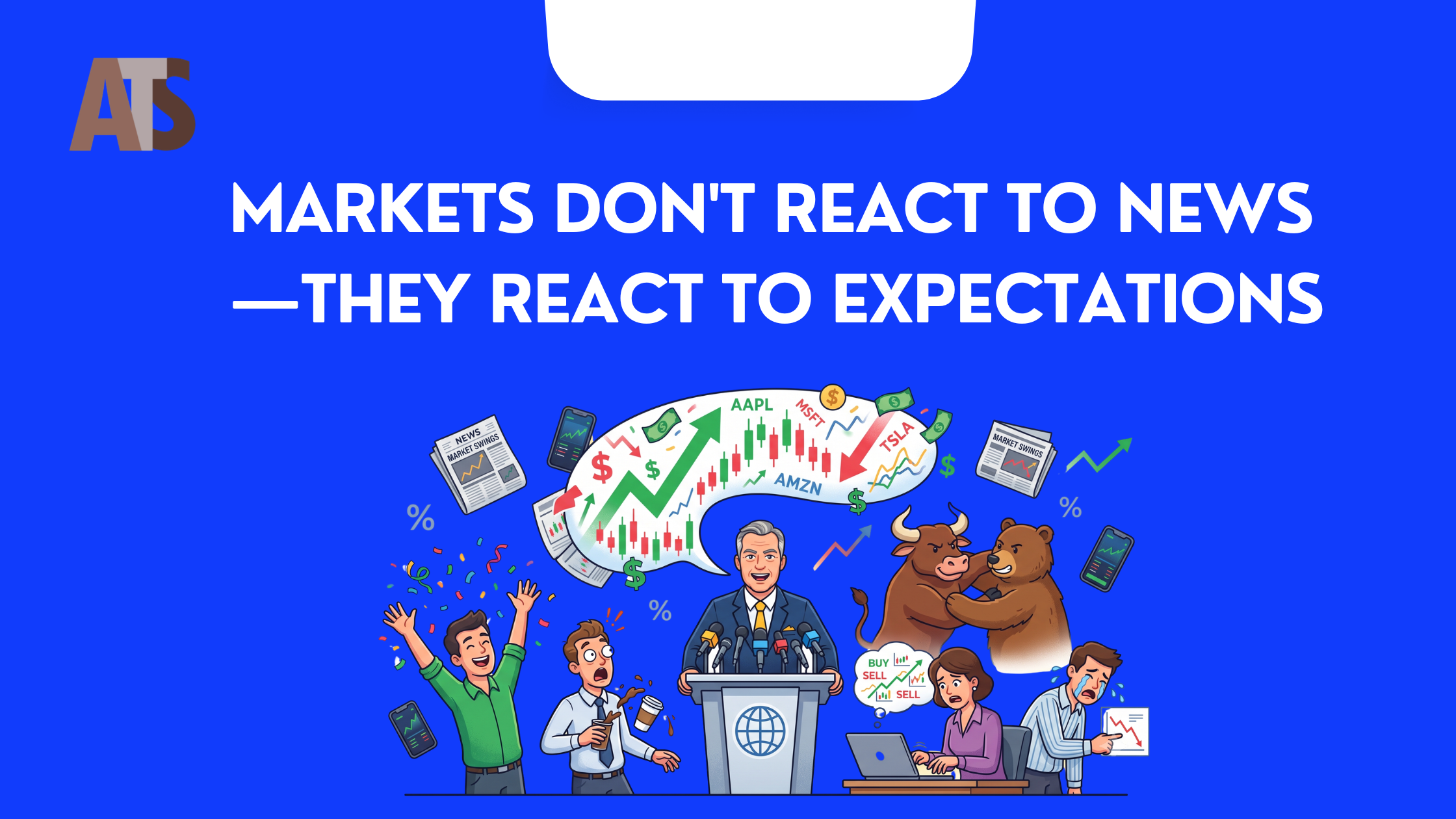
Have you ever noticed that the stock market can rise or fall within minutes of a speech by a President, Prime Minister, Finance Minister, Central Bank Governor, or even a CEO?
A single sentence can erase billions of dollars in market value—or create it.
But why does this happen? How can just a few words influence the prices of thousands of companies?
The answer lies in expectations, investor psychology, and the future outlook.
Let's understand how markets interpret announcements and examine real examples from the past year.
Why Markets React to Speeches Instead of Waiting for Results
The stock market is forward-looking.
When investors buy a stock, they aren't buying today's profits—they're buying the company's expected future earnings.
Every important announcement changes those expectations.
For example:
-
Will interest rates increase?
-
Will taxes change?
-
Will businesses receive incentives?
-
Will inflation become a problem?
-
Will there be a war or peace?
-
Will consumer spending increase?
If investors believe future earnings will improve, stock prices usually rise.
If they expect slower growth or higher risks, prices tend to fall.
This explains why markets often move before any actual economic change occurs.
The Four Types of Leaders Who Move Markets
1. Central Bank Leaders
Central banks have one of the strongest influences on financial markets because they control:
-
Interest rates
-
Inflation policy
-
Liquidity in the economy
-
Money supply
Higher interest rates generally make borrowing more expensive, which can slow economic activity. Lower rates often encourage spending and investment.
Technology, real estate, automobile, and banking stocks can all react differently depending on the policy outlook.
2. Political Leaders
Governments influence markets through:
-
Budgets
-
Tax reforms
-
Infrastructure spending
-
Trade policies
-
Subsidies
-
Regulations
These announcements can immediately shift money into sectors expected to benefit.
3. Corporate Leaders
When CEOs discuss:
-
Revenue guidance
-
AI investments
-
Expansion plans
-
New products
investors reassess the company's future earnings potential.
This is why earnings calls frequently produce sharp stock-price moves.
4. Geopolitical Leaders
Wars, ceasefires, sanctions, tariffs, and diplomatic negotiations affect:
-
Oil prices
-
Defence companies
-
Airlines
-
Gold
-
Global trade
Markets quickly reprice these risks.
Real Examples That Moved Markets (Past Year)
Example 1: Donald Trump's Tariff Announcements (2025)
In 2025, President Donald Trump announced broad tariffs on imports from several countries, reviving concerns about a global trade war. Investors feared higher costs for businesses, slower trade, and rising inflation.
Market reaction:
-
Global equity markets declined.
-
Technology and export-oriented companies came under pressure.
-
Volatility increased significantly.
Why?
Tariffs increase the cost of imported goods.
Higher costs often reduce corporate profit margins and may push prices higher for consumers.
Markets immediately priced in these future risks.
Example 2: Softer Trade Signals Sparked a Relief Rally
As negotiations progressed and some tariff measures were softened or delayed, investor sentiment improved.
Markets recovered because traders believed economic disruption might be less severe than initially feared.
This illustrates an important principle:
Markets react more to changes in expectations than to headlines alone.
Example 3: Federal Reserve Communication
Throughout 2025, officials from the U.S. Federal Reserve repeatedly emphasized that inflation remained a concern and that interest rates could stay elevated for longer.
Immediately after these comments:
-
Bond yields increased.
-
Technology stocks weakened.
-
Growth companies experienced higher volatility.
The reason is straightforward.
Higher interest rates reduce the present value of future earnings, making high-growth companies relatively less attractive.
Example 4: India's Union Budget
Every Union Budget is closely watched because it directly influences different industries.
Infrastructure spending, tax measures, fiscal discipline, and sector incentives all affect company earnings expectations.
Academic research has consistently shown that budget announcements create measurable abnormal returns in Indian equity markets because investors rapidly adjust their expectations.
Example 5: India's Defence Sector
Following heightened geopolitical tensions and continued government emphasis on defence procurement and domestic manufacturing, India's defence sector became one of the strongest-performing themes.
Over the following year:
-
The Nifty India Defence Index rose sharply.
-
Defence companies collectively added substantial market value as investors anticipated sustained government spending and long-term order books.
This demonstrates how policy direction—not just company earnings—can drive sector-wide performance.
Why Markets Sometimes Fall Even After Good News
This surprises many new investors.
Imagine analysts expect a company to grow profits by 30%.
The company reports 20% growth.
Although 20% is objectively strong, the stock may still fall because it failed to meet expectations.
Markets compare reality with what investors were already anticipating.
This is why analysts often say:
"The market had already priced it in."
How Professional Investors Interpret Speeches
Institutional investors don't simply listen to speeches.
They analyze:
-
Every change in wording
-
Future guidance
-
Tone of confidence
-
Policy direction
-
Economic risks
-
Inflation outlook
-
Employment trends
-
Trade relations
Many trading firms use AI and natural language processing to analyze speeches in real time and execute trades within seconds of key announcements. Research also shows that incorporating news sentiment improves models designed to predict short-term stock movements.
Sectors That Typically React First
| Announcement | Likely Beneficiaries | Potential Losers |
|---|---|---|
| Interest rate cut | Banks (credit growth), Realty, Auto | Savings-oriented financial products |
| Interest rate hike | Banks (mixed impact), Fixed income | Realty, High-growth Technology |
| Infrastructure spending | Cement, Steel, Capital Goods | Limited immediate losers |
| Defence spending | Defence manufacturers | Neutral for most sectors |
| Oil price surge | Energy producers | Airlines, Logistics, Paint companies |
| AI investment | Technology, Semiconductors | Companies slow to adopt AI |
Key Takeaways for Investors
Every major speech is a source of new information.
However, markets care less about the announcement itself and more about how it changes expectations.
Before reacting to any headline, ask yourself:
-
Was this expected?
-
Does it improve future earnings?
-
Which industries benefit?
-
Which sectors face higher costs?
-
Has the market already priced this information in?
Successful investors understand that markets are not emotional reactions to today's events—they are continuous forecasts of tomorrow's economy.
Final Thoughts
Leaders don't move markets because of their titles—they move markets because their words can change expectations about growth, inflation, interest rates, corporate earnings, and geopolitical stability.
The next time you see headlines such as:
-
"Markets surge after central bank speech."
-
"Stocks tumble after tariff announcement."
-
"Defence shares rally following government statement."
remember that investors are not reacting to the present—they are pricing the future.
Understanding this principle is one of the most valuable lessons any investor can learn.