12. What Does a Bullish Candlestick Indicate?
A bullish candlestick represents a scenario where the closing price of a stock is higher than the opening price during a specific time period. It indicates that buyers were in control, pushing the price upward — a sign of buying pressure or optimism in the market.
“A bullish candle tells you that bulls (buyers) had the upper hand during that time frame.”
Structure of a Bullish Candlestick
| Candle Pattern | Meaning |
|---|---|
Visual Representation
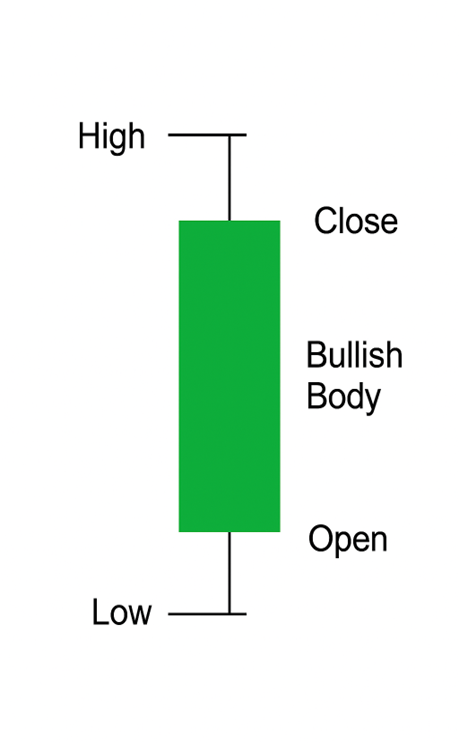
What Does a Bullish Candle Tell Traders?
A bullish candle suggests:
- Buyers dominated the session
- Market sentiment is positive
- Momentum may continue upward, especially if confirmed by volume or trend
Bullish Candles in Different Contexts
| Situation | Implication |
|---|---|
Bullish Candlestick Patterns (Single & Multi-Candle)
| Pattern | Type | Meaning |
|---|---|---|
These patterns become powerful at support zones or after long downtrends.
Bullish Candle + Volume = Stronger Signal
- Large green candle with above-average volume = stronger buying conviction
- Volume helps confirm whether the price action has support from real traders
Key Takeaways
- A bullish candlestick means the price closed higher than it opened
- It reflects buying pressure and optimistic sentiment
- Used to confirm uptrends, reversals, and entry signals
- Strong bullish candles on high volume carry more weight
- Traders use these candles to spot opportunities in both short- and long-term trades