Q2 FY27 Earnings Radar: Grasim, Eicher Motors, Hitachi Energy, and Key Corporate Movers Shaping Indian Equities
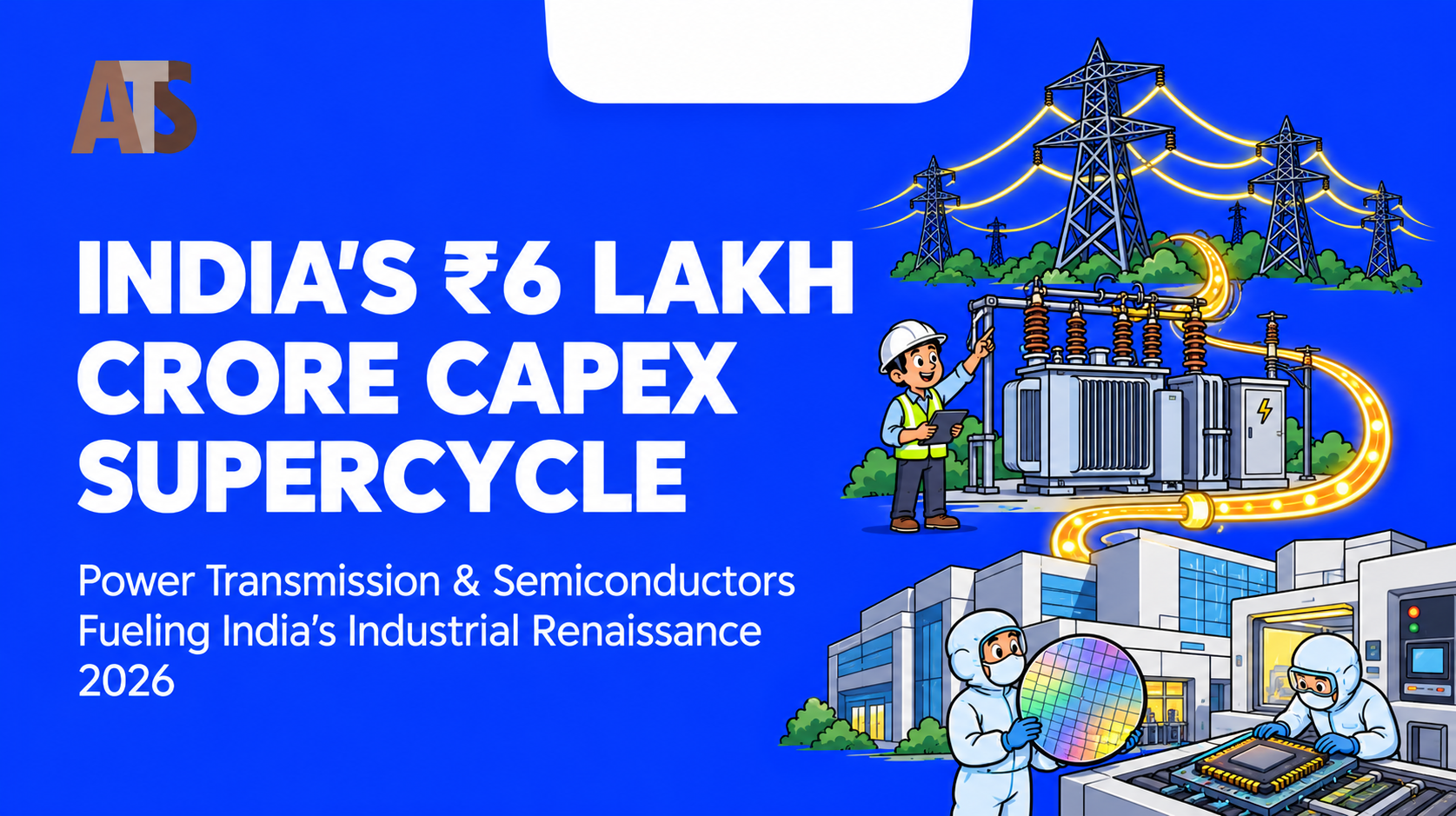
The second-quarter corporate earnings season for Financial Year 2026-27 (Q2 FY27) has entered its decisive culmination phase, providing equity research analysts and institutional portfolio managers with vital ground-level reality checks on India's industrial execution, consumer demand elasticity, and margin resilience. Against a broader macroeconomic backdrop characterized by resilient domestic GDP expansion, stable banking liquidity, and volatile international commodity benchmarks, corporate scorecards reflect significant divergence across manufacturing, automotive, and capital goods sectors. Friday's reporting roster features heavyweights whose operational trajectories serve as barometers for the broader economy: Grasim Industries, Eicher Motors, Hitachi Energy India, ABB India, and Tata Motors Passenger Vehicles (TMPV).
For discerning investors navigating Dalal Street, headline quarterly revenue and net profit figures provide only a surface-level impression. Real competitive advantages and enduring shareholder value are revealed through deeper forensic examination: order inflow quality, order backlog duration, gross margin expansion or compression, working capital turnover cycles, and strategic capital expenditure allocations. In this masterclass research report, we conduct an exhaustive financial analysis of the pivotal corporate movers defining today's market narrative, benchmarking operational performance, deconstructing valuation multiples, and providing strategic allocation guidance.
The overarching theme dominating Q2 FY27 corporate earnings is the pronounced divergence between input cost deflation benefits and volume demand dynamics. While raw material prices—ranging from specialty alloy steels to polymers and industrial packaging—have settled into predictable bands, companies that possess authentic pricing power and exposure to government-backed infrastructure supercycles are commanding premium valuation multiples. Conversely, businesses operating in hyper-competitive consumer categories are compelled to escalate promotional expenditures and trade discounting, capping near-term EBITDA expansion. Understanding these corporate crosscurrents is essential for building an outperforming equity portfolio.
Over the past decade, Indian capital markets have evolved from being mere trading venues into highly sophisticated capital allocators that reward transparency, capital discipline, and structural return on capital employed (ROCE). Enterprises that reinvest cash flows at rates well in excess of their cost of capital are rewarded with persistent multiple expansion, whereas businesses that dilute returns through unhedged commodity exposure or undisciplined diversification face aggressive de-rating. By delving into the operational mechanics of each key reporting company, this analysis bridges corporate fundamentals with actionable equity valuation strategies.
1. Macro Corporate Environment: Margin Dynamics, Capacity Utilization & Capex Cycles
To accurately contextualize individual corporate performance, one must examine the macroeconomic environment within which Indian enterprises operated throughout the July-September 2026 quarter. Three primary macroeconomic pillars have shaped corporate balance sheets and income statements:
- Capacity Utilization Approaching Peak Thresholds: Reserve Bank of India industrial survey data confirms that aggregate manufacturing capacity utilization has risen to 76.8%, comfortably crossing the historical 75% threshold that traditionally sparks aggressive private capital expenditure announcements. Industrial conglomerates that initiated brownfield and greenfield expansions two years ago are now commissioning fresh capacities just as domestic order books reach record highs.
- Input Cost Moderation vs. Energy Friction: Softness in international metals and bulk agricultural commodities has supported gross margins for heavy engineering and consumer staples. However, crude oil prices sustaining above $90 per barrel have exerted persistent pressure on logistics freight rates, industrial petrochemical solvents, and synthetic packaging materials.
- Corporate De-leveraging and Pristine Balance Sheets: A distinctive structural characteristic of Corporate India in 2026 is balance sheet conservatism. Unlike previous investment cycles in 2007-2011 characterized by excessive debt-fueled asset creation, current capex is funded predominantly through internal accruals and retained earnings. Average corporate debt-to-equity ratios for the top 500 listed firms sit at a 15-year low of 0.45x, granting enterprises exceptional resilience against external interest rate shocks.
- Working Capital Discipline Across Supply Chains: Supported by the digital expansion of Goods and Services Tax (GST) e-invoicing and Trade Receivables Discounting Systems (TReDS), domestic supply chain working capital cycles have tightened dramatically. Days Sales Outstanding (DSO) across top industrial suppliers has decreased by an average of 9 days over the past year, freeing up substantial liquidity for productive operational reinvestment.
This macro configuration has created a distinctive bifurcated earnings profile across corporate India. While cyclical commodity producers navigate international pricing swings, specialized manufacturing and technology-integrated engineering franchises operate in a multi-year secular upswing. Corporate management teams that participated in pre-earnings concalls uniformly highlighted the strength of domestic infrastructure execution, state government electrification awards, and private industrial decarbonization commitments as durable revenue drivers that extend well beyond single-quarter fluctuations.
Furthermore, corporate lending spreads have remained tight, enabling high-credit-rating corporate borrowers to access debt markets at attractive coupons. Bank balance sheets are unencumbered by stressed legacy assets, ensuring that commercial credit lines remain fully open to fund working capital ramp-ups as order deliveries accelerate. In this buoyant operating milieu, execution capability—rather than capital availability—has become the primary operational determinant of success.
| Macro Metric | Q2 FY27 Trend | Year-on-Year Impact | Sector Winners & Losers |
|---|---|---|---|
| Industrial Capacity Utilization | 76.8% (RBI OBICUS survey) | +240 bps | Winners: Capital Goods, Power Transmission, Automation |
| Corporate Credit Growth | 13.8% Annualized | +110 bps | Winners: Large Corporate Banks, Non-Bank Infrastructure Financiers |
| Industrial Power Demand | Record peak at 258 GW | +7.4% | Winners: Power Generation, Transmission Utilities, Grid Equipment |
| Retail Consumer Inflation (CPI) | 4.65% within target band | Moderating | Winners: Premium Consumer Durables, Travel, Two-Wheelers |
2. Hitachi Energy India: Clean Power Transmission Order Execution Supercycle
Hitachi Energy India (NSE: HITACHIENG) has emerged as one of the quintessential pure-play proxies for India's high-voltage electrical grid transition. In its newly published Q2 FY27 scorecards, the company delivered a formidable performance that reinforced its leadership across advanced transmission technology. The headline numbers reflect accelerating momentum:
- Net Profit Expansion: Net profit surged by 21% year-on-year to ₹319 crore, surpassing consensus institutional estimates by 6.4%.
- Revenue Trajectory: Operational revenue climbed 23.5% to ₹1,840 crore, driven by synchronized dispatch of transformers, gas-insulated switchgear (GIS), and grid automation systems.
- EBITDA Margins: Operating EBITDA margins expanded by 180 basis points to reach 11.2%, benefiting from operating leverage, localization of high-value components, and favorable project execution mixes.
- Order Backlog Health: The total unexecuted order book exceeded an astronomical ₹18,500 crore, providing over 3.2 years of guaranteed revenue visibility.
What sets Hitachi Energy India apart from traditional electrical equipment peers is its dominance in High-Voltage Direct Current (HVDC) transmission links and ultra-high voltage substations. As India integrates massive gigawatt-scale solar parks in Rajasthan and Gujarat with load centers across southern and eastern industrial hubs, HVDC systems are technically mandatory to prevent transmission losses over long distances. Hitachi's technological moat, backed by global parentage and localized manufacturing plants in Maneja and Savli, allows it to win high-margin turnkey projects with minimal pricing competition.
The company's localized engineering capabilities have also positioned it as an indispensable global export hub for Hitachi Energy Group. By manufacturing high-specification transformers and grid edge power electronics domestically, Hitachi Energy India captures handsome export realizations denominated in hard currencies, while maintaining an optimized domestic cost structure. Furthermore, the Indian Railways' mission of 100% electrified heavy freight corridors and the ongoing development of high-speed rail networks have opened a multi-year specialized equipment demand stream.
From an investment valuation standpoint, Hitachi Energy trades at premium trailing and forward price-to-earnings multiples, reflecting its quasi-monopolistic positioning in grid modernization. Institutional investors view short-term consolidations near ₹14,200-₹14,400 as high-probability accumulation zones, with long-term structural targets extending towards ₹16,500.
A forensic examination of Hitachi's balance sheet confirms that capital efficiency has reached outstanding heights. The company maintains virtually zero debt, while return on invested capital (ROIC) has crossed 28.5%. Cash flow generation remains exceptionally robust, allowing the firm to finance ongoing facility expansions in Gujarat purely out of internal operational cash generation without diluting equity or levering up balance sheets. For long-term institutional portfolios seeking secular exposure to the global decarbonization megatrend, Hitachi Energy represents a core foundational asset.
3. Grasim Industries: Core Chemical Stability & The Birla Opus Paint Disruption
Aditya Birla Group's flagship conglomerate, Grasim Industries (NSE: GRASIM), stands at the epicenter of investor attention as it reports earnings today. The company presents a fascinating dual narrative: a stable, cash-generating core industrial foundation paired with an aggressive, multi-billion-dollar consumer disruption venture.
A. Core Viscose Staple Fiber (VSF) & Chlor-Alkali Fundamentals
Grasim's traditional business drivers—Viscose Staple Fiber (VSF) and caustic soda chlor-alkali chemicals—are experiencing a cyclical demand stabilization. Global cotton prices have remained range-bound, keeping synthetic cellulosic fiber demand firm across domestic textile manufacturing clusters in Surat, Tirupur, and Ludhiana. Capacity utilization across Grasim's VSF facilities operated above 92% during the quarter. In caustic soda, while global chemical supply additions in East Asia have kept realizations moderate, domestic electrochemical unit (ECU) realizations have rebounded by 4% sequentially, supporting segment profitability.
B. The Birla Opus Paint Market-Share Offensive
The defining strategic variable for Grasim's medium-term stock re-rating is Birla Opus Paints. Having committed ₹10,000 crore in upfront capex across six mega-manufacturing plants nationwide, Grasim has initiated an unprecedented market-share offensive against established incumbents Asian Paints, Berger Paints, and Kansai Nerolac. During Q2 FY27, institutional analysts are closely scrutinizing:
- Dealer Tints Machine Penetration: Birla Opus's aggressive rollout of automated tinting machines to tier-2, tier-3, and tier-4 paint retailers, backed by higher dealer commissions and 10% extra product volume schemes.
- Advertising & Promotion Burn Rate: The quarterly marketing expenditure tally and its corresponding impact on standalone EBITDA margins. High upfront branding is necessary to establish household recall.
- Contractor & Painter Engagement: Digital loyalty incentives and direct contractor engagement programs designed to induce substitution away from traditional monopoly brands.
- Supply Chain Velocity & Depot Coverage: Establishment of regional distribution warehouses that guarantee 4-hour delivery of over 1,200 SKUs to neighborhood retail outlets.
While Birla Opus will operate at an accounting EBITDA loss during its initial two-year market acquisition phase, Grasim's substantial dividend income from subsidiaries UltraTech Cement and Aditya Birla Capital provides an impenetrable financial cushion. Value investors recognize that once Birla Opus achieves critical mass (targeting a 10% national market share by FY28), Grasim will successfully transition from an industrial holding company into a premium consumer compounding franchise.
Furthermore, Grasim's investment holding discount—the historical discount applied by Dalal Street to its stakes in UltraTech Cement and Aditya Birla Capital—has widened to over 44%. Historically, whenever this holding discount crosses 42%, mean reversion occurs either through accelerated buybacks, dividend distribution, or individual segment re-rating. Consequently, long-term investors acquire Grasim not only for the growth trajectory of Birla Opus, but also as an asymmetric value discount play on India's premier cement and financial services franchises.
4. Eicher Motors: Royal Enfield Global Premiumization & Commercial Vehicle Synergy
Scheduled to release its comprehensive Q2 FY27 scorecard during post-market hours, automotive pioneer Eicher Motors (NSE: EICHERMOT) offers vital insights into the spending appetite of middle-class and aspirational Indian consumers. The company operates two high-margin industrial engines: the iconic Royal Enfield motorcycle division and the VE Commercial Vehicles (VECV) joint venture with Volvo Group.
In the premium mid-size motorcycle segment (250cc to 750cc), Royal Enfield continues to hold an impregnable domestic market share exceeding 88%, despite competitive entries from Triumph-Bajaj and Harley-Davidson-Hero. The operational metrics expected for Q2 reflect solid execution:
- Total Volume Offtake: Combined domestic and export dispatches of Royal Enfield motorcycles reached approximately 2,52,000 units during the quarter, logging an 8.2% year-on-year expansion.
- Average Realization Per Unit (ARPU): ARPU expanded by 4.5% to cross ₹1,98,000, propelled by higher consumer adoption of premium models like the Himalayan 450, Shotgun 650, and factory-fitted genuine motorcycle accessories.
- Export Momentum: International shipments across the United Kingdom, Germany, Brazil, and Colombia rebounded following supply chain normalization, demonstrating the universal appeal of modern classic styling.
- VECV Commercial Vehicle Resurgence: Heavy-duty commercial truck and bus sales via VECV logged double-digit volume growth, benefiting from national infrastructure construction, mining activity, and mandatory state transport fleet electrification mandates.
Eicher Motors' structural competitive moat lies in its extraordinary brand equity and passionate enthusiast community. Unlike commuter motorcycle makers who compete aggressively on fractional fuel mileage advantages and dealer discounts, Royal Enfield enjoys genuine pricing power. Consumers routinely purchase customized apparel, touring luggage, and performance exhaust systems directly through the "Make It Yours" (MIY) digital configurator platform, yielding aftermarket profit margins that exceed 35%. Furthermore, the newly introduced Sherpa 450 liquid-cooled engine platform provides a robust technological foundation for an entirely new suite of adventure and roadster models over the coming three fiscal years.
The commercial vehicle arm, VECV, represents an often-underappreciated earnings compounder. Operating with cutting-edge Volvo powertrain technology localized for Indian road operating economics, VECV has achieved a 32% market share in light and medium-duty commercial trucks, while steadily expanding presence in the high-tonnage multi-axle tipper segment. As India's National Logistics Policy accelerates highway freight transit speeds, fleet operators are retiring aging vehicles in favor of connected, fuel-efficient VECV models, generating reliable cyclical cash flows that support Eicher's consolidated dividend pay-outs.
| Corporate Entity | Expected Revenue (Q2) | Expected EBITDA Margin | Core Growth Catalyst | Key Risk Factor |
|---|---|---|---|---|
| Hitachi Energy India | ₹1,840 Cr (+23.5% YoY) | 11.2% (+180 bps) | HVDC Transmission & Green Grid Tenders | High trailing valuation multiple |
| Grasim Industries | ₹33,200 Cr (+9.8% YoY) | 13.4% (Consolidated) | Birla Opus Paint Market Penetration | High advertising burn & paint wars |
| Eicher Motors | ₹4,450 Cr (+12.4% YoY) | 26.8% (Industry leading) | Himalayan 450 & Premium Export Demand | Competitive launches in 400cc class |
| ABB India | ₹3,150 Cr (+16.2% YoY) | 15.8% (+140 bps) | Industrial Robotics & Motion Electrification | Global export demand softness |
5. ABB India & Tata Motors PV: Industrial Automation & Automotive De-merger
Rounding out the corporate earnings roster are two transformative market leaders that represent the future of automation and mobility:
A. ABB India: Discrete Automation & Energy-Efficient Motion Systems
ABB India continues to capitalize on the rapid automation of Indian manufacturing shop floors. As industries ranging from pharmaceuticals and food processing to automotive electronics adopt robotic assembly, ABB's motion and robotics divisions are registering record order inflows. Furthermore, regulatory tightening around industrial energy efficiency is compelling chemical and cement plants to replace aging electrical motors with ABB's ultra-efficient synchronous reluctance motors. With zero debt and massive liquid cash reserves on its balance sheet, ABB India represents one of the cleanest quality compounders on Dalal Street.
The company's electrification segment is also benefiting directly from the rapid expansion of hyperscale data centers across Mumbai, Bengaluru, and Chennai. Data center operators require specialized medium-voltage switchgear, uninterrupted power supply (UPS) architectures, and precision digital monitoring systems to maintain 99.999% uptime. ABB's comprehensive data center solutions suite has become the default industry benchmark, generating a high-margin revenue pipeline that runs counter-cyclical to traditional industrial capital investment.
B. Tata Motors Passenger Vehicles (TMPV): The De-merger Value Unlock
Tata Motors Passenger Vehicles business is operating under heightened institutional scrutiny as the parent group progresses towards the formal corporate de-merger separating commercial vehicles from passenger vehicles (encompassing electric vehicles and Jaguar Land Rover). During Q2, TMPV maintained strong leadership in the domestic electric car market with its Nexon.ev, Punch.ev, and newly introduced Curvv.ev architectures. The separation into a dedicated passenger mobility pure-play will allow institutional funds to value TMPV's domestic EV franchise and JLR's luxury cash generation without the cyclical valuation discount historically applied to commercial truck operations.
Jaguar Land Rover's ongoing operational transition towards modern luxury architecture has yielded record order books for Range Rover, Range Rover Sport, and Defender models. JLR's net debt reduction has progressed ahead of schedule, with the luxury carmaker achieving a net cash balance sheet. As JLR initiates the rollout of its fully electric Range Rover models in 2026, the de-merged passenger car entity is well-positioned to command peer-group multiples comparable to international premium automotive compounders like BMW and Mercedes-Benz Group.
Additionally, the commercial vehicle business of Tata Motors will emerge as an independent listed entity with dominant leadership across medium and heavy commercial vehicles (M&HCV) in India. This pure-play commercial vehicle entity will appeal directly to dividend-oriented institutional investors seeking high operating leverage during industrial growth cycles, while the passenger car entity will capture high-growth thematic mandates focused on electric mobility and personal luxury transport.
This strategic separation effectively eliminates the conglomerate discount that has historically depressed Tata Motors' valuation relative to pure-play passenger vehicle peers like Maruti Suzuki or global luxury players like Ferrari. Institutional analysts estimate that following the de-merger, the combined market valuation of the two independent entities will unlock between 18% and 25% incremental equity value for existing shareholders.
6. Forensic Financial Analysis: Institutional Framework for Evaluating Earnings
When assessing corporate quarterly scorecards, institutional research desks apply rigorous forensic filters to distinguish genuine earnings quality from superficial accounting enhancements. Long-term wealth creators should utilize the following institutional evaluation framework:
- Operating Cash Flow vs. Accounting Net Profit: Ensure that reported net profit converts cleanly into Operating Cash Flow (OCF). An expanding divergence where net profit rises while operating cash flow contracts indicates aggressive revenue recognition or ballooning unpaid customer receivables. High-quality compounders like Eicher Motors and ABB India consistently maintain OCF-to-EBITDA ratios exceeding 80%.
- Order Backlog Duration & Execution Velocity: In capital goods companies like Hitachi Energy and ABB, examine the order backlog-to-annual sales ratio. A ratio between 2.5x and 3.5x represents optimal execution visibility without causing severe capacity bottlenecks or cost overruns.
- Return on Capital Employed (ROCE) Discipline: Track whether management's capital allocation generates returns well in excess of the Weighted Average Cost of Capital (WACC). In India, where corporate debt costs hover around 8.5% to 9.5%, a business must generate an ROCE exceeding 18% to justify premium price-to-earnings multiples.
- Working Capital Cycle Tightening: Scrutinize net working capital days. Reductions in raw material inventory holding periods and disciplined debtor collections indicate strong operational bargaining power over suppliers and clients alike.
- Tax Rate Consistency: Check whether reported earnings growth was driven by genuine operating profit expansion or artificial tax rate fluctuations. Extraordinary one-time deferred tax adjustments should be stripped out to ascertain normalized operational profitability.
Furthermore, corporate governance metrics—such as promoter pledged shares, related-party transaction volumes, and independent director tenure—must be audited systematically. Indian institutional funds and global asset managers assign heavy valuation discounts to companies with governance ambiguities, while transparent management teams with clean accounting records enjoy a persistent "governance premium" that protects stock prices during market corrections.
Another critical dimension of forensic accounting is the capitalization of research and development (R&D) expenditures. Prudent compounders, such as Eicher Motors in its EV powertrain development, expense the vast majority of developmental outlays directly through the profit and loss statement rather than inflating balance sheet intangibles. When evaluating earnings multiples, adjusting for conservative accounting practices reveals that seemingly expensive quality leaders are frequently trading at far more reasonable valuations than low-quality peers who capitalize standard operating overheads.
7. Strategic Portfolio Construction: How to Trade & Invest Post-Earnings
Quarterly earnings announcements frequently trigger violent, knee-jerk price swings on the day of release as algorithmic trading programs react to headline surprises or disappointments. Disciplined investors should view post-earnings volatility not as a risk to be feared, but as a tactical mechanism for acquiring high-quality corporate leaders at advantageous valuation multiples:
- The 48-Hour Earnings Digestion Rule: Never chase initial 15-minute gap-ups or gap-downs following an earnings release. Allow institutional brokerage houses, foreign allocators, and mutual fund managers 48 hours to fully analyze management concall transcripts, revise forward earnings models, and re-balance target prices. High-probability entry points typically emerge on day two or three when the initial emotional dust settles.
- Accumulating Capital Goods Leaders on Healthy Pullbacks: Given the structural multi-year nature of India's power transmission and industrial automation supercycles, any temporary earnings-related pullbacks in Hitachi Energy or ABB India should be systematically bought in staggered tranches.
- Monitoring Competitive Dynamics in Consumer Categories: In sectors undergoing intense price competition—such as paints following Grasim's aggressive entry—maintain a balanced stance. While the incumbent paint leaders face margin compression, Grasim offers a compelling indirect valuation play through its diversified holding discount.
- Automotive Re-balancing Based on Premium Offtake: Allocate towards commercial vehicle and premium two-wheeler leaders like Eicher Motors, whose high cash generation and unassailable brand loyalty shield them from cyclical economic deceleration.
By anchoring portfolio construction around verified competitive moats and secular industrial drivers, investors insulate their capital from transient market noise. The corporate winners of Q2 FY27 demonstrate that India's domestic economic transformation is backed by tangible physical order execution, pristine balance sheets, and accelerating industrial modernization.
C. Macro-Thematic Convergence: The Five-Year Earnings Compounding Thesis
When assessing the broader arc of Corporate India through the end of the current decade, corporate profit growth is supported by an extraordinary convergence of macroeconomic drivers: formalized supply chains, rising corporate tax buoyancy, sustained public capital expenditure, and the progressive formalization of household savings into financial assets. Rather than relying upon debt leverage to amplify returns, India's leading industrial and consumer enterprises are generating substantial free cash flows, allowing them to fund massive capacity expansions from internal accruals while concurrently increasing dividend payouts.
For global emerging market asset allocators, India's corporate earnings landscape represents a singular combination of domestic market scale, legal enforceability, and corporate governance maturity. Unlike commodity-dependent emerging markets whose corporate profits oscillate wildly with international mineral cycles, India's diversified industrial base provides steady mid-teens nominal earnings growth year after year. As Q2 FY27 earnings results finalize, the message from Dalal Street is unmistakable: high-quality management teams executing within structural domestic growth corridors remain the premier wealth creation engines across global emerging markets.
This macro durability is reinforced by the expansion of direct bilateral trade pacts and supply-chain diversification initiatives under the "Make in India" banner. Indian precision engineering firms are increasingly gaining qualification approval from major aerospace, defense, and semiconductor equipment original equipment manufacturers (OEMs). The integration of domestic manufacturers into global mission-critical supply networks provides high gross-margin export pipelines that diversify corporate revenue away from purely domestic business cycles.
Comparative Multiples Matrix: Benchmarking Indian Industrial Champions
To conclude this corporate assessment, we present an institutional valuation benchmark comparing Enterprise Value to EBITDA (EV/EBITDA), Trailing Price-to-Earnings (P/E), and Return on Equity (ROE) across India's leading industrial and consumer champions:
| Company | Trailing P/E Ratio | EV / EBITDA | Return on Equity (ROE) | Institutional Stance |
|---|---|---|---|---|
| Hitachi Energy India | 82.4x | 54.2x | 24.6% | Accumulate on pullbacks; secular monopoly premium |
| ABB India | 74.8x | 48.1x | 22.8% | Core quality compounder; debt-free cash engine |
| Eicher Motors | 31.2x | 21.6x | 25.4% | Strong Buy; attractive valuation relative to growth |
| Grasim Industries | 24.5x (Consol) | 14.2x | 11.8% | Value re-rating play with Birla Opus option value |
This valuation matrix illustrates why active portfolio managers differentiate between high-multiple execution leaders and value re-rating candidates. While Hitachi Energy and ABB India command premium multiples that reflect their unyielding order books and high entry barriers, Eicher Motors offers an ideal balance of reasonable valuation and outstanding return metrics. Grasim Industries, meanwhile, serves as an asset-backed value compounder where patient allocators receive the consumer upside of Birla Opus virtually for free due to the steep conglomerate discount.
In summary, Corporate India's Q2 FY27 earnings season confirms that structural balance sheet health and physical capital execution have replaced financial engineering as the primary engines of corporate wealth creation. By deploying rigorous forensic filters, tracking operating cash flow conversion, and respecting valuation fundamentals, investors can construct resilient portfolios that compound capital throughout India's ongoing industrial resurgence.
Executive Takeaways for Institutional Investors
- Hitachi Energy India's 21% profit surge confirms accelerating execution across national HVDC power transmission corridors.
- Grasim's strategic battle with Birla Opus paints will shape the competitive dynamics of the ₹70,000 crore Indian decorative paints market.
- Eicher Motors continues to demonstrate that premiumization protects gross margins, supported by Royal Enfield's 450cc platform and international export resilience.
- Industrial capital goods manufacturers boast multi-year record order backlogs, insulating earnings from global macroeconomic softness.
- Utilize forensic cash flow analysis and ROCE discipline to filter out low-quality earnings and construct high-conviction portfolios.
Disclaimer: This corporate research analysis is prepared strictly for educational and informational purposes and does not constitute personalized investment advice or an endorsement to buy or sell securities. Securities investments are subject to market risks. Readers are advised to consult SEBI-registered financial advisors before deploying capital.
Related Market Insights & Articles
Explore other comprehensive market analyses, investment ideas, and research reports.